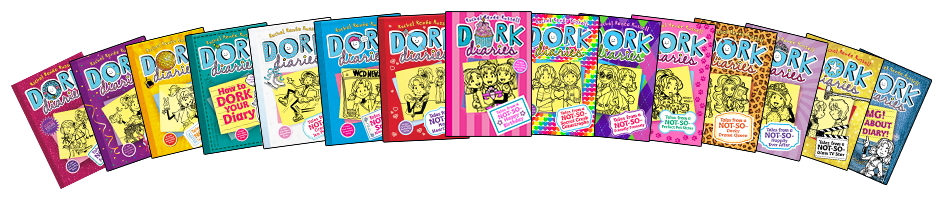
The #1 New York Times bestselling Dork Diaries series follows Nikki Maxwell as she chronicles her life through text and art—her move to a new school, her battles with queen bee MacKenzie, and her zany adventures with her BFFs Chloe and Zoey by her side!
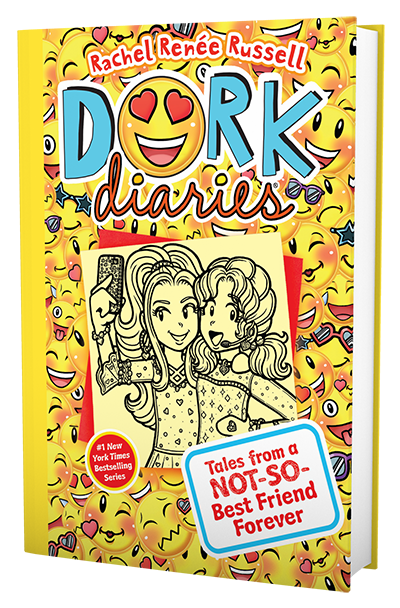
The bestselling series continues... Dork Diaries 14: Tales from a Not-So-Best Friend Forever is on sale October 22!
Pre-order your copy today
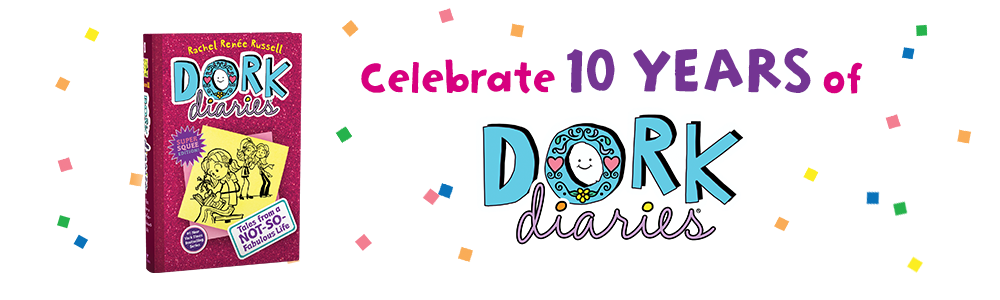
Celebrate 10 years of Nikki’s a-DORK-able adventures!
Dork Diaries 1 Full Color: Tales from a Not-So-Fabulous Life
Meet Nikki Maxwell! She’s starting eighth grade at a new school—and her very first diary packed with hilarious stories and art in this SUPER SQUEE updated edition of Book One of the #1 New York Times bestselling Dork Diaries series! Nikki confesses all in her first diary ever: her epic battle with her mom for an iPhone, meeting her new soon-to-be BFFs Chloe and Zoey, falling for adorably sweet crush Brandon, dealing with her zany little sister Brianna’s antics—and the immediate clashes with mean girl MacKenzie, who becomes Nikki’s rival in a schoolwide art competition.
Full Free Fixed Best Rape Videos — With No Download
Sharing a survival story is an act of profound courage that serves a dual purpose: it heals the storyteller and validates the listener. For decades, psychological research has highlighted the therapeutic value of narrative integration—the process of turning a traumatic event into a coherent story. Shattering Isolation
Survivor stories serve as the emotional heart of awareness campaigns, transforming abstract statistics into relatable human experiences. By sharing personal journeys of struggle and resilience, survivors break down social stigmas and inspire collective action. These narratives are not merely testimonials; they are strategic tools that drive behavioral change and policy reform. The Power of First-Person Narratives Sharing a survival story is an act of
Do not script survivors. Canned testimonials smell fake. Instead, provide prompts: “Tell us about the moment you knew you needed help.” Let them speak in their vernacular. A 22-year-old will say “sucks.” Let them. Authenticity outperforms polish every time. Here are three distinct campaigns where survivor stories
For those currently in the "thick of it," a survivor's story acts as a lighthouse. It provides tangible proof that survival is possible. Narratives that include specific hurdles—and how they were overcome—serve as informal guides for others navigating similar paths. The Framework of Impact: How Awareness Campaigns Work
The best campaigns do not extract stories; they co-create them. Survivors should have editorial control over how their narrative is used, including the right to anonymity. The mantra must be "Nothing about us without us."